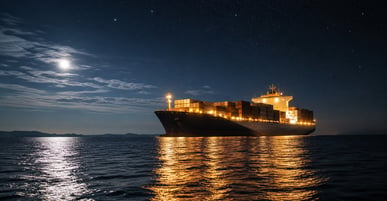
Container lines are navigating not one Middle East disruption but two, and it's worth being precise about which is which. The Red Sea crisis, driven by Houthi attacks on shipping through the Bab el-Mandeb strait since late 2023, pushed most carriers onto the longer Cape of Good Hope route, adding 10 to 14 days to Asia-Europe transit times compared with the pre-crisis route through Suez, along with a 25 to 30% cost premium on FAK rates. Schedule reliability on major east-west lanes is still below 60%, according to GoFreight. Then, in a separate escalation starting in late February 2026, conflict shut down the Strait of Hormuz, sending Far East to Persian Gulf spot rates tripling to more than $7,000 per TEU within 30 days, a sharper spike than either COVID or the Red Sea crisis produced, according to Xeneta's own Three Disruptions, One Fragile System report.
The two crises hit different lanes, but neither has resolved, and they are starting to compound. Xeneta's Q2 2026 Quarterly Reliability Report shows the toll on the Gulf trade specifically: the Middle East corridor posted the worst average delay of any trade lane Xeneta tracks in Q2, at 4.9 days, with on-time arrivals stuck at 25%, essentially tied with Africa for the least reliable corridor in the world.
The disruption isn't staying contained to the Gulf either. The same report attributes March's blank-sailing spike on Far East to Europe, where carriers cut 22% of planned capacity, partly to the Hormuz conflict compounding with seasonal Chinese New Year capacity withdrawal. Some carriers, including Maersk and CMA CGM, have started testing limited Red Sea transits again, Container News reports, but analysts warn a single security incident on either front could undo months of progress.
For dry cargo, that uncertainty is a planning headache.
For reefer, it's a different kind of risk.
Every extra day at sea is another day of continuous power draw to hold temperature, and a rerouted or delayed sailing does not just arrive late. It can arrive spoiled. Reefer capacity is already tight in 2026, and Red Sea reroutes stretch those Asia-Europe sailings further, pushing lead times out at exactly the moment cold-chain shippers need certainty most.
There's no forecasting your way out of this. Nobody knows which week a carrier will next test the Red Sea, or whether the next Houthi incident undoes six months of progress. Surprises like this will keep happening. The only real lever procurement has is building a freight strategy resilient enough to absorb them, one lane and one contract at a time.
Reefer runs on a different calendar
General peak-season coverage tends to fixate on retail's back-to-school and holiday restocking cycle, but reefer and perishable freight was never really on that calendar. It runs on harvest and growing seasons instead.
Reefer rates typically run 50 to 100% above the equivalent dry container rate on the same lane, spiking to 2 to 3 times the dry rate during peak season and tight capacity, according to HZ Containers. That premium is exactly why perishable tenders get carrier priority: C.H. Robinson advises negotiating perishable contracts at least four to six months ahead of the season, well before the general contract cycle opens. That's the calendar cold-chain procurement actually negotiates against.
The problem in 2026 is that even a well-planned harvest-season tender can get overtaken by a Red Sea reroute or a Hormuz-driven capacity crunch nobody had on the calendar at all.
Margins are thinner, and the pricing power that used to protect them is gone
Food and beverage margin is under real pressure right now. Rabobank projects US food inflation running 4% to 6% into 2027, driven largely by energy costs that hit refrigerated storage and cold-chain transport harder than almost any other category. At the same time, GLP-1 medications are reshaping what people buy: down on snacks and alcohol, up on protein and nutrition categories, a mix shift Food Business News reports is already affecting volume across a network not built for it. Private label keeps taking share from mid-tier brands, squeezing exactly the companies with the least room to absorb a freight surprise, per Deloitte's 2026 Consumer Products Outlook.
None of this is new information to anyone running procurement in this category. What's changed is how little slack is left to manage it. Freight, and specifically the temperature-controlled lanes this industry actually depends on, is one of the last controllable cost lines standing.
The gap between dry-box data and reefer reality
Here's the problem: most freight benchmarks are built on dry containers, because that's the bulk of global trade. Reefer capacity runs a genuinely different market, priced differently, constrained differently, and exposed to different risks, according to Arcon's 2026 reefer market update. A dry-box index tells a cold-chain shipper almost nothing useful about the lane that actually matters to them. It's why Xeneta tracks reefer as its own container type, alongside standard and high-cube dry boxes, rather than folding it into a single blended average that a mostly-dry market would dominate.
That gap shows up constantly in conversations with food and beverage procurement teams. Rates get negotiated, but nobody has a clean way to check whether the reefer premium they just accepted was fair or inflated. Surcharges stack, get renamed, and get renegotiated lane by lane with no consistent reference point. And when a container sits at port longer than expected, waiting on a delayed pickup or a paperwork hold, the clock on detention and demurrage runs the same for a load of frozen protein as it does for a container of hardware, except one of them spoils.
Some teams still have real blind spots on reefer.
The procurement teams still operating without a reefer-specific view are making decisions on incomplete information and hoping it holds. They're negotiating cold-chain rates using dry-container logic, or worse, using whatever number a single forwarder quotes them, with no way to know if that number reflects the market or just that forwarder's margin. When a surcharge shows up mid-contract, they have no basis to challenge it. When a carrier reroutes or misses a sailing on a perishable lane, they find out about the reliability problem after the product is already at risk, not before it was booked.
The teams doing better have stopped treating cold-chain freight as a variant of dry-box freight and started benchmarking it as its own category. They know what a fair reefer rate looks like on the lanes they actually ship. They can see carrier reliability specifically on temperature-controlled routes, including which carriers are still detouring around the Cape and which are testing the Red Sea again, not blended in with a carrier's overall on-time performance. And when free days and detention charges start building on a reefer box, they catch it before it becomes a spoilage event on top of a cost one.
Build for the surprises you can't forecast
Every number in this piece is a variable your reefer strategy already has to price in: a Middle East corridor running at 25% on-time, a premium that can triple overnight when capacity tightens, a tender calendar that opens six months before you actually need the space. None of that resolves itself. What changes is whether procurement sees it coming on a neutral benchmark built for reefer and cold-chain lanes specifically, one that validates the surcharge stack instead of accepting it on faith and quantifies free-days and detention exposure before a container dwells long enough to spoil, rather than finding out from a forwarder's invoice after the fact.
The question isn't whether the next surprise is coming. It's whether your reefer strategy is built to take the hit without breaking.
See what this looks like in practice. Read the 2026 Freight Intelligence Buyers' Guide for the questions every food and beverage procurement team should ask about cold-chain visibility, or explore how Xeneta supports food and beverage freight procurement across reefer and dry-container lanes.